
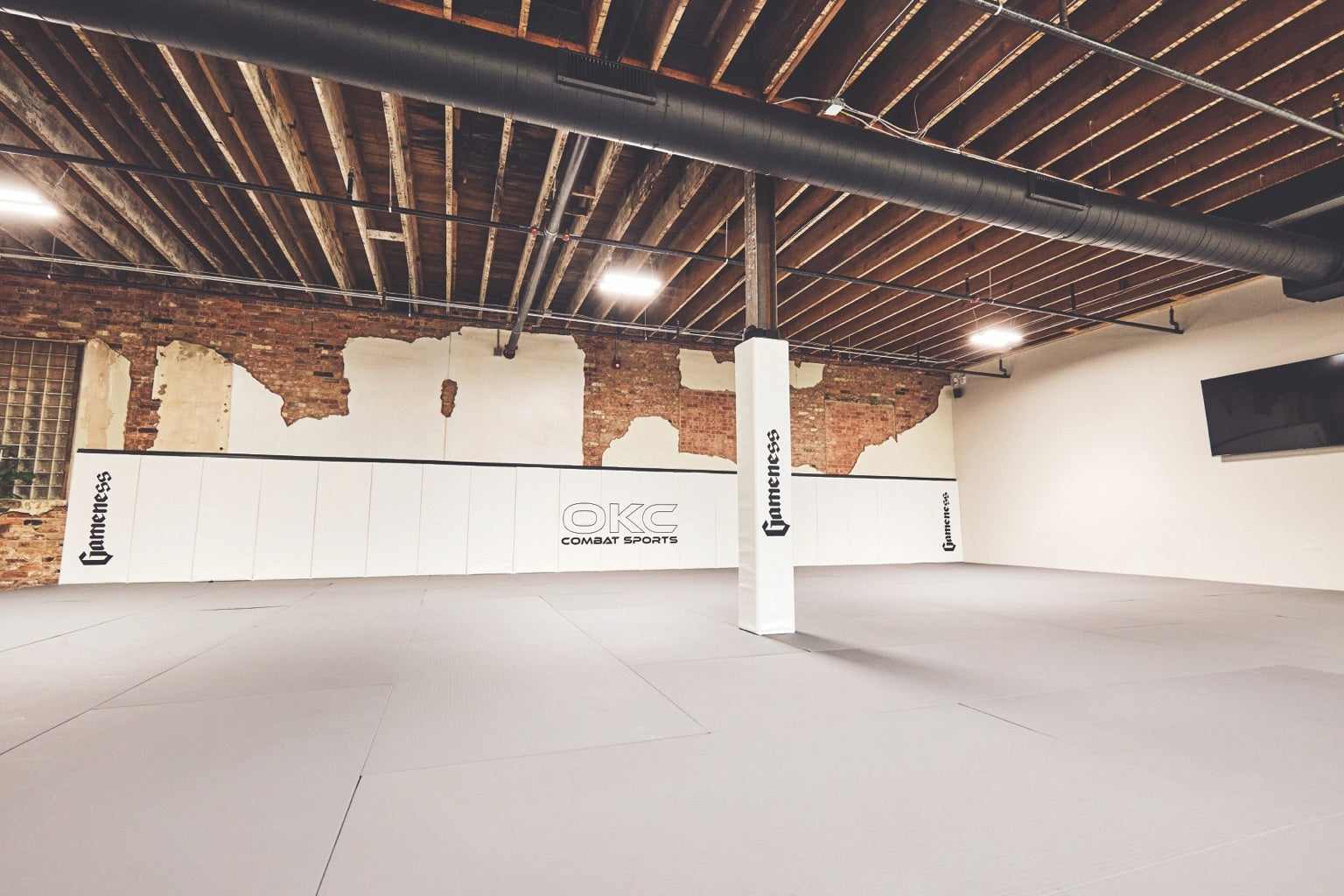
How to Choose the Best BJJ Mats for Gi, No-Gi, and Competition Training
In Brazilian Jiu-Jitsu, the mat is never just the floor. It’s where athletes build their base, develop pressure, refine technique, and learn to move with confidence at full speed. The right BJJ mats inspire confidence, support consistent performance, and help reduce fatigue over years of training. The wrong mats can create hesitation, disrupt movement, and increase wear on the body over time.
One of the most important decisions when choosing Brazilian Jiu-Jitsu mats is surface texture—specifically, tatami mats versus smooth mats. Each surface offers unique advantages, and the best choice depends on your academy’s training style, coaching philosophy, and competition goals.
Gi Training: Tatami or Smooth (Depending on Your Style)
Traditional gi training tends to be slower, more methodical, and focused on pressure, control, and positional dominance. For this reason, many academies prefer tatami mats, which provide additional traction during takedowns, pressure passing, and base-building movements. The textured surface can also help athletes feel more stable while standing and transitioning between positions.
That said, smooth BJJ mats are also an excellent choice for gi training. Many high-level academies prefer smooth surfaces because they promote fluid movement, easier transitions, and less friction during scrambles and guard exchanges. Both options provide outstanding performance—the right choice depends on how your team trains.
No-Gi Training: Smooth or Tatami (Depending on Preference)
No-gi training is generally faster, more explosive, and filled with constant scrambles and transitions. Smooth martial arts mats allow easier slides, pivots, and movement during high-paced exchanges, making them a popular choice for many no-gi academies. They’re also typically more comfortable on bare skin during extended training sessions.
However, tatami mats perform exceptionally well in no-gi environments, too. The textured surface provides dependable traction when shooting, sprawling, and scrambling—especially as sweat accumulates throughout class. Many athletes appreciate the additional grip because it provides greater stability without restricting movement.
Ultimately, both surfaces work exceptionally well. The best choice comes down to athlete preference and your academy’s style of training.
Competition Training: Consistency Is Key
When preparing athletes for competition, consistency is often more important than choosing one texture over another. Competitors perform best when the training surface feels familiar, allowing them to focus entirely on execution rather than adjusting to different footing.
Many major tournaments utilize competition BJJ mats with a tatami-style finish, while others compete on smooth vinyl surfaces. If your students compete regularly, training on a surface that closely resembles tournament conditions can help build confidence and reduce unnecessary adjustments on match day.
Beyond Texture: Thickness and Foam Density Matter
Surface texture is only one part of choosing the right academy flooring. Thickness and foam density play an equally important role in athlete safety and long-term comfort.
Most training mats for BJJ range between 1⅜ inches and 2 inches thick. The ideal thickness depends on your academy’s training style, the frequency of takedowns, and whether your facility hosts multiple martial arts disciplines. Combined with the proper foam density, thicker mats help absorb impact while maintaining the stable footing athletes need for effective training.
Choosing quality grappling mats means finding the right balance between shock absorption and stability so athletes can train confidently without sacrificing performance.
Installation Matters
Even the highest-quality Brazilian Jiu-Jitsu mats can underperform if they’re installed incorrectly. Uneven seams, shifting sections, and exposed edges can interrupt training, create tripping hazards, and increase the risk of injury.
Professional installation ensures a secure, seamless surface that allows athletes to move freely during every round. It also helps extend the lifespan of your mats by reducing premature wear along seams and edges, protecting your investment for years to come.
Which Surface Is Right for Your Academy?
While every academy is different, here’s a general guideline:
|
Training Style |
Recommended Surface |
|---|---|
|
Traditional Gi Training |
Tatami or Smooth |
|
No-Gi Training |
Smooth or Tatami |
|
Mixed Gi & No-Gi Academy |
Either surface works well—choose based on your coaching style and athlete preference |
|
Competition Preparation |
Match the surface your athletes compete on whenever possible |
At the end of the day, Brazilian Jiu-Jitsu is built from the ground up. Choosing the right BJJ mats—whether you prefer smooth or tatami mats—and pairing them with the proper thickness, foam density, and professional installation creates a safer, more effective training environment for every athlete who steps onto the mat.
Build Your Academy with Gameness Mats
Whether you’re opening your first academy, replacing aging jiu jitsu academy mats, or expanding your training space, Gameness offers premium martial arts mats designed specifically for Brazilian Jiu-Jitsu. From tatami and smooth finishes to custom layouts and professional installation, our team can help you build the ideal training surface for your academy.
Ready to upgrade your training space? Request a custom quote from our mat experts today and build your academy from the ground up.